
Which tiles to choose for the bathroom?

Wall and floor tiles are very popular in bathrooms. Most tiles are waterproof, easy to clean, relatively easy to install, and there is a huge selection. But which tiles will you choose for your bathroom?
In this blog post, we'll help you make this choice.

Photo 1: Bathroom with mosaic wall tiles on the left, ceramic floor tiles, and ceramic tiles with a print on the right
Which tiles are suitable for the bathroom?
Before you can make a choice, you first need to know which tiles are suitable for the bathroom.
Waterproof bathroom tiles with anti-slip
Bathroom tiles must first and foremost be waterproof. This immediately eliminates a number of tile types. What remains are ceramic tiles. They are waterproof, scratch-resistant, non-slip, durable, colourfast, and not prone to staining. When buying ceramics, pay attention to the anti-slip value. This is often indicated by "R" or, specifically for bathrooms, with NEN expressed in A, B, or C. Ask about this when purchasing.
Ceramic bathroom tiles
Ceramic tiles come in various large and small formats. They are available with different prints and patterns. For example, you can choose ceramic tiles with a marble look or terrazzo look. This way, you get the benefits of ceramic without the drawbacks of real marble (colour variations and high price) or terrazzo (difficult to cut to size and high price).
Ceramic wall and floor tiles can be purchased from around 20 euros per m2, going up to as much as 150 euros per m2. So there's something for everyone. Pay close attention to the differences when comparing. Consult experts from tile dealer Solza if you can't spot the difference yourself.

Photo 2: Bathroom with large-format ceramic tiles in natural stone look / Furniture wall covered with concrete-look ceramic tile
Mosaic tiles in the bathroom
You can also choose Mosaic. Mosaic tiles are also made of ceramic (or Porcelain) but they are very small tiles. The Moroccan Zellige tiles, formerly widely used in bathhouses, are well-known. These small tiles or tile mats are extremely suitable for the bathroom. Sometimes mosaic tiles are still handmade from fired clay. This results in beautiful variations, but also a higher price. Mosaic typically costs between 75 and 200 euros per m2.

Photo 3: Bathroom and toilet with blue mosaic tiles, subtly shaded from light to dark
Glazed wall tiles in the bathroom
A third option is glazed wall tiles. These tiles are also made of ceramic or porcelain. The difference is that these tiles have a glazed layer. The advantage is that the tiles are very easy to clean.
Many glazed tiles come from Spain or Portugal and are often still handmade. This means no two tiles are alike, allowing you to bring your bathroom to life with the most beautiful variations. Of course, this is also widely replicated by machines. PLEASE NOTE that these tiles are often not suitable for floors. Always check with the seller. These tiles are available from 15 euros per m2 and can go up to 100 euros per m2.
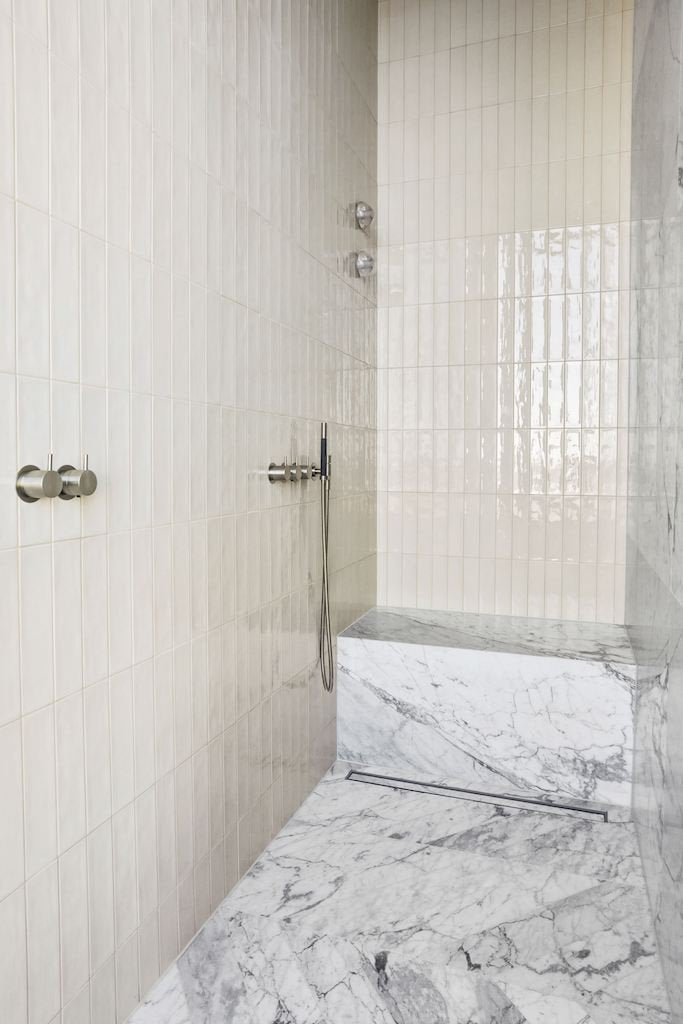
Photo 4: Glazed wall tiles in bathroom with ceramic floor tiles in marble look
Which tiles are less suitable for the bathroom?
Natural stone tiles are less suitable for bathrooms
It is possible to install natural stone tiles in the bathroom. However, this has a few disadvantages. Although many people claim that they are very hard and therefore waterproof, this is NOT the case. Natural stone is very expensive, needs to be waterproofed, and is costly to install.
-
Natural stone is porous, and water can penetrate the tiles, with all the associated consequences. If you do want to choose natural stone tiles for the bathroom, have them treated by a specialist. For example, they can be made waterproof by impregnation.
-
Natural stone is difficult to clean. Because tiles are porous, stains can occur. Especially in the bathroom, you will suffer from limescale. You should not clean this with just any soap. Often, special pH-neutral cleaning agents are required.
-
Natural stone is prone to scratches. Unlike ceramic, which is scratch-resistant, scratches can appear in natural stone with use.
-
Perhaps the biggest disadvantage is that natural stone is extremely slippery when wet.

Photo 5: Bathroom with real natural stone tiles in the form of "Belgian bluestone" with special treatment
An excellent alternative are our natural stone-look tiles made of ceramic. These are affordable, colorfast, more durable, very dimensionally stable, and easier to cut to size than real natural stone. They are also easier to clean.
Portuguese cement tiles are less suitable for bathrooms
Cement tiles or Portuguese cement tiles are NOT suitable for the bathroom. As the name suggests, these tiles are made of cement. Cement is porous and therefore not suitable for getting wet.
Some claim that you can waterproof Portuguese tiles with impregnation. This can be done to a certain extent, but for use as a floor or shower wall in the bathroom, we advise against it. You could place them in the bathroom on walls that rarely get wet. In that case, have them properly treated by an Expert.
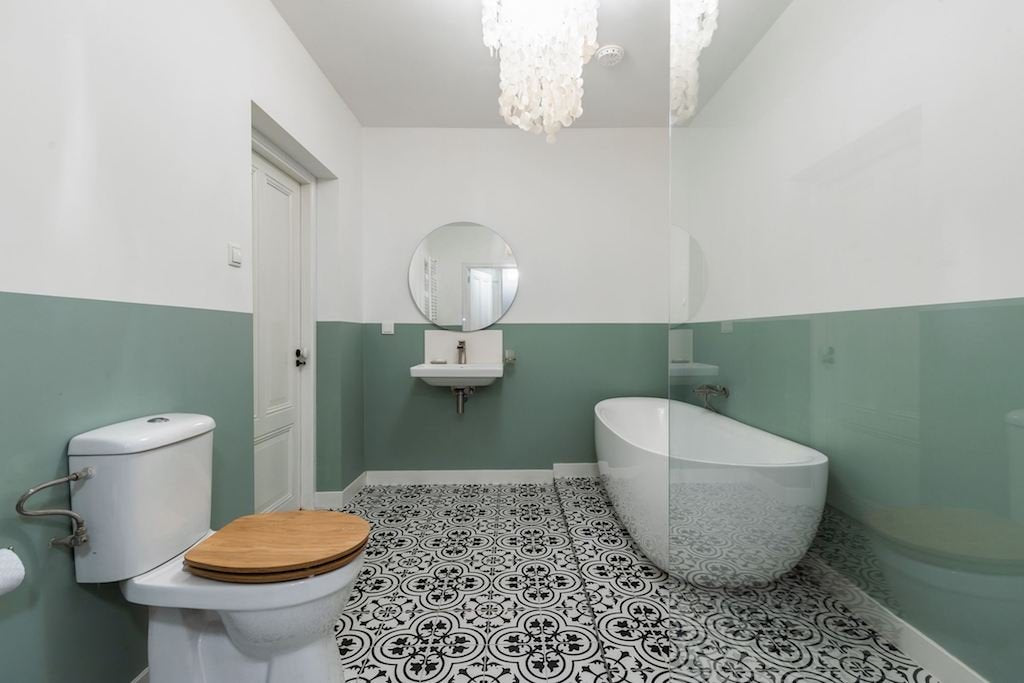
Photo 6: Ceramic floor tiles with the look of a Portuguese cement tile
Tips for choosing bathroom tiles
Now that we've explained which tiles you can choose for the bathroom, here are a few handy tips to help you make your final decision.
-
Opt for large-format tiles in sleek, straight spaces with few difficult corners or curves. This minimizes grout lines, which saves money and maximizes the chance of a completely waterproof finish.
-
Choose Mosaic tiles in spaces with curves or many difficult corners. With small tiles, you can easily work around these and it saves a lot of cutting.
-
Combine mosaic with large-format tiles. Do you have spaces with straight walls but also curved walls or intricate corners? Choose a combination. For example, lay 60x60 ceramic tiles on the floor and use mosaic tiles for your curved shower wall.
-
In spaces or on walls that are not level, this is very noticeable when using large-format ceramic tiles. Keep this in mind and carefully plan where your grout lines will be.
-
Choose natural and relaxing colours. The bathroom is a place where you retreat to unwind and relax.
-
Choose a light-coloured grout. Our tip is to choose lighter grout than the colour of your tile. This makes the tile stand out instead of the grout. However, we advise against white grout, as it shows dirt too easily. For example, opt for a light concrete grey grout with dark grey tiles, or a dark grey grout with black tiles.

Photo 7: Bathroom in earthy tones with a combination of large-format ceramics and mosaic
Bathroom tile inspiration
With these few handy tips for choosing bathroom tiles, we hope to have helped you along the way. We hope you can make the right choice and realize your dream bathroom. Also, check out our collection of ceramic bathroom tiles.
Meer uit de kennisbank
 TegelsLes grandes dalles Floorify passent à 5,5 mm : qu'est-ce que cela change pour vous ?
 TegelsTile patterns in open spaces: tips and inspiration
 TegelsCombining Tile Patterns with Furniture: Tips and Inspiration
Liever even overleggen?
Bel of loop binnen in onze showroom in Alphen aan den Rijn.

