
All about Spanish tiles at a glance

Spanish tiles have a long and rich history, dating back to the 16th century. In this blog post, however, we are talking about Spanish tiles used for floors, walls, and countertops, or to decorate certain elements.

Photo 1: Historic building in Spain covered with Spanish tiles
What are Spanish tiles?
Spanish tiles are a type of clay tile with a glaze layer. Originally, these tiles were very popular in Spain and parts of Latin America. Today, Spanish tiles are immensely popular in Southern Europe and are increasingly seen in other Western countries such as the Netherlands and the USA.
Spanish Terracotta tiles as a base
The tiles are handmade from clay and fired in an oven. Historically, Spanish tiles are usually red or orange in color. This color is also known as Terracotta. For several centuries now, these Spanish Terracotta tiles, in all sorts of shapes, have been decorated with a glaze layer, a pattern, or a motif, and they come in all colors of the rainbow.
Spanish floor and wall tiles
These Spanish tiles are often used in homes with Spanish-style architecture. The double-fired variant is suitable as a floor tile and is widely used for Spanish floors both outdoors and indoors. The single-fired variant of Spanish tile is only suitable for walls in, for example, the bathroom or kitchen.
Sizes of Spanish tiles
The most common Spanish tiles are the square 10x10 cm and 13x13 cm tiles for walls. Spanish wall tiles often have a thickness of 8mm. We also know many rectangular Spanish tiles. Consider Spanish subway tiles of 7.5x15 cm or even elongated tiles of 5x25 cm or 10x30 cm.
Spanish floor tiles are often available as tile mats. Small Spanish tiles are attached to a mat to make them easier to lay. Besides Spanish tile mats, there are also square floor tiles such as 12x12 cm tiles, rectangular Spanish floor tiles, and for example, tiles in Hexagon shape or even other unique shapes.
The cheerful colors and patterns of Spanish floor and wall tiles add a lot of atmosphere to a home.

Photo 2: Spanish wall tile made of glazed clay in mustard yellow color
Also check out our special page with terracotta tiles from Spain. The earthy brown color of terracotta is available from tile dealer Solza in square and rectangular formats. Suitable for indoors and outdoors.
Authentic Spanish tiles
Authentic Spanish tiles are tiles, handmade from clay, that are fired at high temperatures in an oven. Before the tiles go into the ovens, they are glazed and thus provided with one of the many colorful colors. The glazing of real Spanish tiles is also a process that is done by hand. The application of this glaze layer creates glossy tiles.
In photo 1, we see typical Spanish tiles that have been hand-decorated by painting the Spanish tiles. Painting Spanish tiles is something that is common and gives the tiles a unique, cheerful, and colorful character.
Because the tiles are made by hand, they have playful and irregular edges. Firing and glazing make the tiles durable and resistant to almost all influences. Spanish tiles are popular for their unique shapes, designs, patterns, and cheerful colors.

Photo 3: Close-up of handmade Spanish wall tile with hand-painted pattern
Modern Spanish tiles
The process described above is still used today. However, it is no longer often done by hand, but by machine. The result of these machine-made tiles is also known as "ceramic tiles".
Modern Spanish wall tiles are made in large factories with modern machines. Efforts are made to reproduce the irregular edges and beautiful color variations. This is somewhat successful, but the result never truly matches the authentic variant.
However, an advantage of machine production is that the tiles do not always have to be glossy. Machines can apply matte color layers to the tiles. Furthermore, almost any desired pattern can be printed on the tiles.

Photo 4: Modern Spanish pattern tiles produced mechanically in factory
Spanish tiles VS Portuguese cement tiles
In photo 2, we see authentic Spanish wall tiles in a uniform mustard yellow color. In photo 3, we see a Spanish patterned tile made and painted by hand. Because Spanish tiles often feature patterns and paintings, they are confused with Portuguese cement tiles.
Difference between Spanish tiles and Portuguese cement tiles
Portuguese cement tiles, however, are made in a completely different way. Namely, from pressed cement instead of clay. These tiles are also often provided with a pattern.
Because the tiles look so similar, they are often confused, and tile suppliers even refer to cement tiles with a pattern as "Spanish tiles" and vice versa. However, this is incorrect!
Spanish tiles are made of clay, provided with a glaze layer, and fired. Portuguese cement tiles are made of cement and pressed under high pressure.
Azulejos means "tiles" in Spanish and Portuguese
Both types of tiles are called Azulejos in both Spanish and Portuguese, because the word Azulejos means "tiles" in both languages. You might have also come across the term "Baldosas," which also means "tiles" in Spanish.
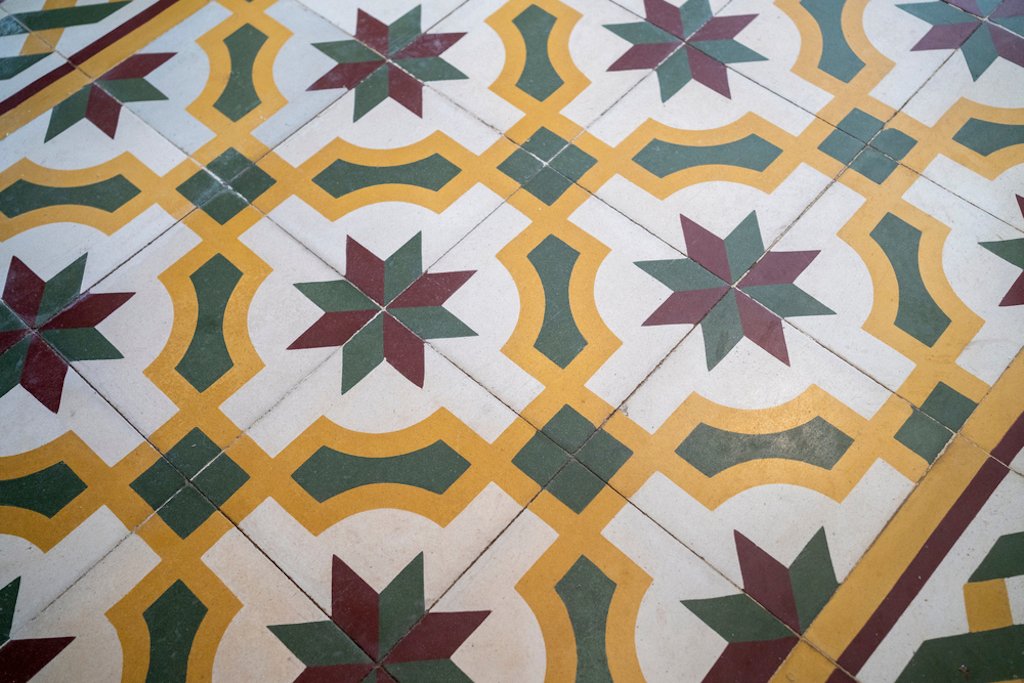
Photo 5: Portuguese cement tiles as floor tiles
Spanish tiles; A sustainable choice
Spanish tiles, also known as azulejos tiles, have been used for centuries in Spain and other parts of the world for their beauty and durability.
There are many advantages to using Spanish tiles. They are extremely durable and can last for many years with little or no maintenance. They are heat-resistant and waterproof, making them a perfect choice for kitchens and bathrooms. And because they are glazed, they are easy to clean and resistant to stains.
Spanish ceramic tiles are fired in kilns at approximately 1150 degrees. This makes the tiles extremely hard. The hardness of the fired Spanish Azulejos or Baldosas results in tiles that are scratch-resistant, wear-resistant, and colorfast, lasting more than a lifetime.
Spanish tiles come in various colors and styles, so you can always find the perfect tiles to match your interior. Spanish tiles can be used on floors or walls, indoors or outdoors, and add a touch of elegance to any home.
Why choose Spanish tiles?
In short, Spanish tiles are a popular choice for flooring and walls in homes due to their durability, beauty, and affordability. They can be used in a variety of applications, both indoors and outdoors, and can add a touch of elegance to any home or business.
If you are considering installing Spanish tiles in a home or business, please contact a professional installer to get the best results.

Photo 6: Outdoor niche covered with patterned Spanish wall tiles

Photo 7: Toilet covered with blue Spanish glazed wall tiles in herringbone pattern

Photo 8: Bathroom with modern Spanish floor tiles in matte green hexagon shape
Meer uit de kennisbank
 TegelsLes grandes dalles Floorify passent à 5,5 mm : qu'est-ce que cela change pour vous ?
 TegelsTile patterns in open spaces: tips and inspiration
 TegelsCombining Tile Patterns with Furniture: Tips and Inspiration
Liever even overleggen?
Bel of loop binnen in onze showroom in Alphen aan den Rijn.

